
Introduction
Daily Fantasy Sports (DFS) in Major League Baseball (MLB) can be exciting but tricky. To build winning lineups, understanding hitter fantasy scores is crucial. This guide covers how scoring works, key metrics, and strategies to maximize your points. Whether you’re a beginner or an intermediate player, this guide will give you the edge.
What is a Hitter Fantasy Score?
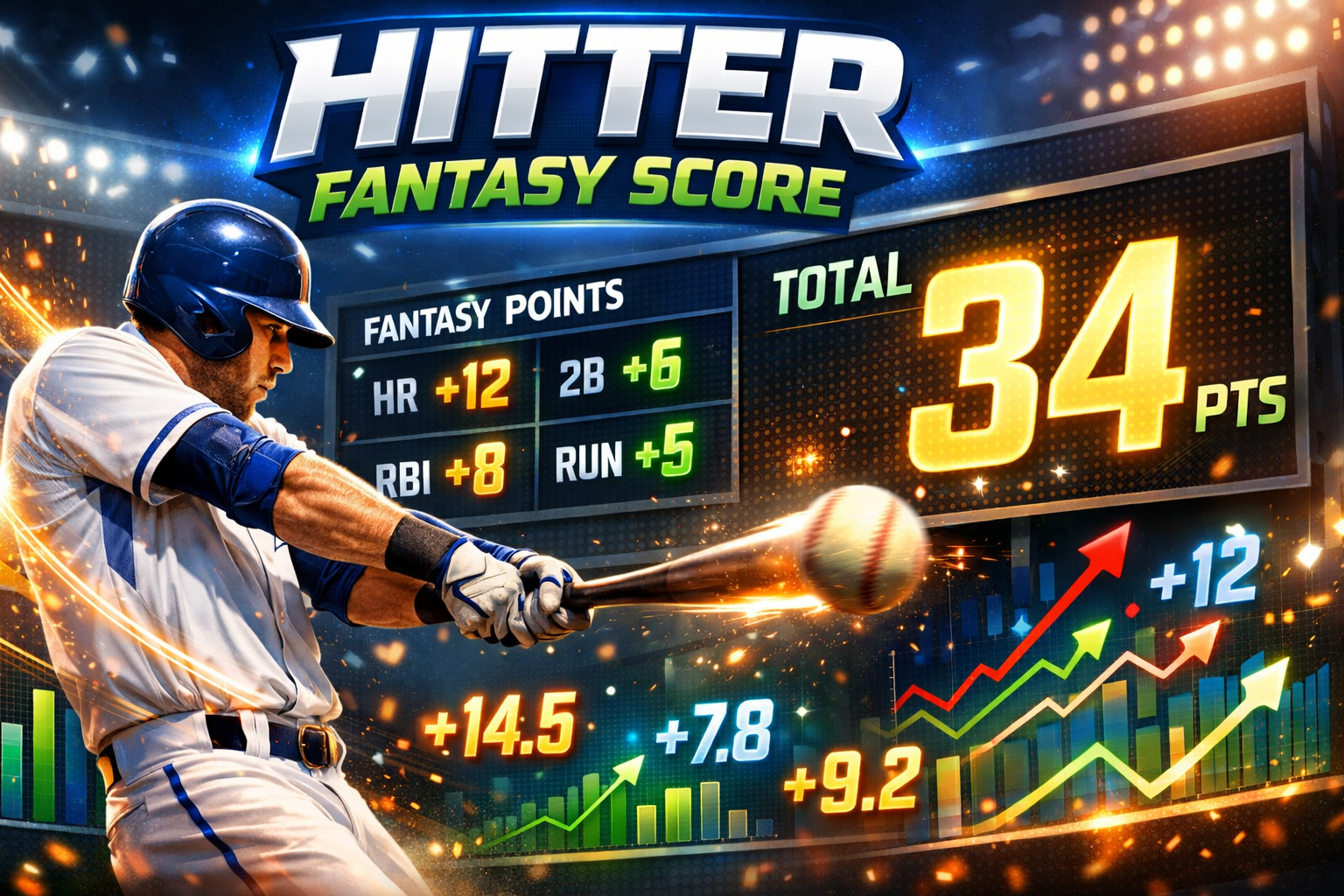
A hitter fantasy score represents the total points a batter earns in DFS based on their in-game performance. Points are awarded for:
- Hits
- Runs
- RBIs
- Home runs
- Walks
- Stolen bases
- Other strategic plays
In short: More extra-base hits, runs, and strategic plays = higher fantasy score.
Standard MLB DFS Scoring Table
| Stat | Points |
|---|---|
| Single | 3 |
| Double | 5 |
| Triple | 8 |
| Home Run | 10 |
| Run | 2 |
| RBI | 2 |
| Walk (BB) | 2 |
| Hit By Pitch (HBP) | 2 |
| Stolen Base | 5 |
Note: Pitchers are scored differently; a pitcher’s points are based on wins, quality starts, strikeouts, outs recorded, and earned runs allowed.
Advanced Metrics That Affect Hitter Scores
While standard stats matter, advanced metrics give you a competitive edge in DFS:
- ISO (Isolated Power) – Measures raw power using only extra-base hits. Higher ISO → more home runs/doubles → higher points.
- wOBA (Weighted On-Base Average) – Weighs all ways of reaching base, giving a better picture than batting average alone.
- Hard-Hit Rate – Percentage of batted balls hit with high exit velocity. Even in unlucky stretches, high hard-hit rate predicts positive regression.
- BABIP (Batting Average on Balls in Play) – Tracks luck on balls in play. Extremely high or low BABIP often regresses toward the mean.
Key Factors to Maximize Your Hitter Fantasy Score
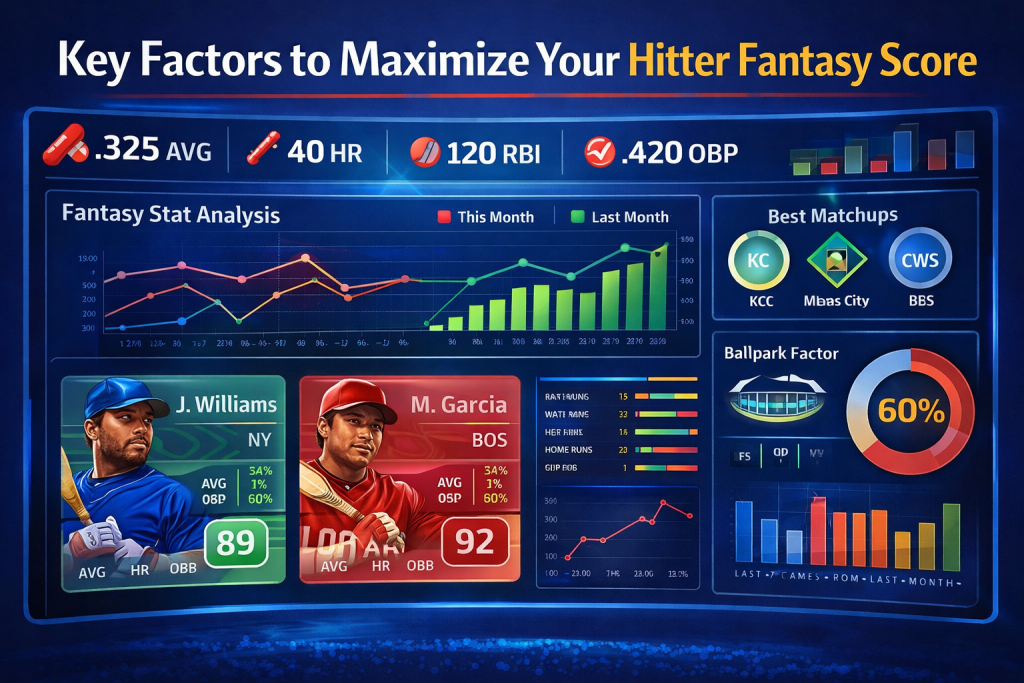
To pick hitters strategically, consider the following:
Batting Order
Hitters at the top of the lineup get more at-bats, which translates to more scoring opportunities. Players in the top 2 spots usually score more runs and RBIs.
Opponent Pitching Matchup
- RHP vs. LHP splits: Some hitters excel against left-handed pitchers but struggle against right-handed ones.
- Check historical stats to predict performance.
Ballpark Factors
Some stadiums favor hitters due to smaller dimensions or altitude advantages.
- Example: Coors Field in Colorado is hitter-friendly.
Player Streaks
- Track hot streaks and slumps.
- Avoid overreacting to one great or bad game.
Stolen Base Opportunities
Hitters on teams with aggressive baserunning can earn extra points. Look for high SB rates and favorable situations.
Common Pitfalls to Avoid
- Small Sample Size BvP: Avoid overvaluing head-to-head matchups with limited history.
- Recency Bias: Don’t chase players just because of one strong game.
- High BABIP: Extremely high batting average on balls in play may regress.
- High Strikeout Rate: Frequent strikeouts can limit points, but some high-power hitters are still worth it due to ISO and wOBA.
Example Hitter Fantasy Score Calculation
Suppose your hitter’s stats in a game:
- 1 Double → 5 points
- 1 Home Run → 10 points
- 1 Run → 2 points
- 2 RBIs → 4 points
- 1 Stolen Base → 5 points
Total Fantasy Score: 5 + 10 + 2 + 4 + 5 = 26 points
Understanding these calculations helps compare players and optimize lineups.
Pro Tips for Building Winning Lineups

- Combine high-floor hitters (consistent performers) with high-ceiling hitters (big play potential).
- Mix in players with favorable matchups and ballpark advantages.
- Budget wisely to include top stars and bargain picks.
- Monitor lineup changes and injuries before locking in.
Beginner-Friendly Platforms
While scoring may vary slightly, platforms like PrizePicks, DraftKings, and FanDuel use these metrics. On PrizePicks:
- Pick MORE or LESS on a player’s projected stats.
- Use FLEX lineups for safety or POWER PLAY for higher payouts.
- Bonus features like Demons (high-risk/high-reward) and Goblins (safer picks) add strategy.
FAQs
What is a hitter fantasy score?
A hitter fantasy score is the total number of points a batter earns in MLB DFS based on in-game performance, including hits, runs, RBIs, home runs, walks, and stolen bases.
How is a hitter fantasy score calculated?
Points are assigned for each stat. For example: Single = 3 points, Double = 5, Triple = 8, Home Run = 10, Run/RBI/Walk/HBP = 2, Stolen Base = 5. Totals combine for the final score.
Which metrics affect hitter fantasy score the most?
Advanced stats like ISO (Isolated Power), wOBA (Weighted On-Base Average), hard-hit rate, and BABIP can predict higher fantasy scores beyond standard stats.
How can I maximize my hitter fantasy score?
Pick hitters at the top of the batting order
Consider opponent pitching matchups (RHP vs LHP)
Account for ballpark factors
Track streaks and hot hitters
Include players with stolen base opportunities
Do different DFS platforms calculate hitter fantasy score differently?
Yes, platforms like PrizePicks, DraftKings, and FanDuel may have slightly different scoring systems, so always check rules before creating lineups.
Can hitters with high strikeouts still get a high fantasy score?
Yes. While frequent strikeouts limit some points, high-power hitters with strong ISO and wOBA can still earn top scores.
How often should I update my lineup to optimize hitter fantasy score?
Daily, before lock-in. Monitor lineup changes, injuries, and pitching matchups to maximize scoring potential for each game.
Conclusion
A hitter fantasy score is more than numbers—it’s strategy, trends, and understanding metrics. By combining standard stats, advanced analytics, and smart lineup construction, you can consistently maximize points and improve your chances of winning in MLB DFS.