

If you follow baseball closely, you’ve probably scrolled past a dozen injury reports without really knowing what half the terms mean. IL stub, day-to-day, 15-day versus 60-day, “no setback”… it can feel like its own language.
This guide breaks down what a baseball injury report actually is, how teams and leagues use it, and how you as a fan, fantasy manager, or bettor should interpret one so you’re not left guessing.
A baseball injury report is an official or team-issued update on a player’s health status, typically noting the type of injury, the roster designation (such as the injured list), and an estimated timeline for return. MLB requires teams to disclose certain injury information for transparency, though the level of detail varies by team and situation. Reports are most useful when you understand the terminology and check them against multiple sources rather than relying on a single headline.
What Goes Into a Baseball Injury Report
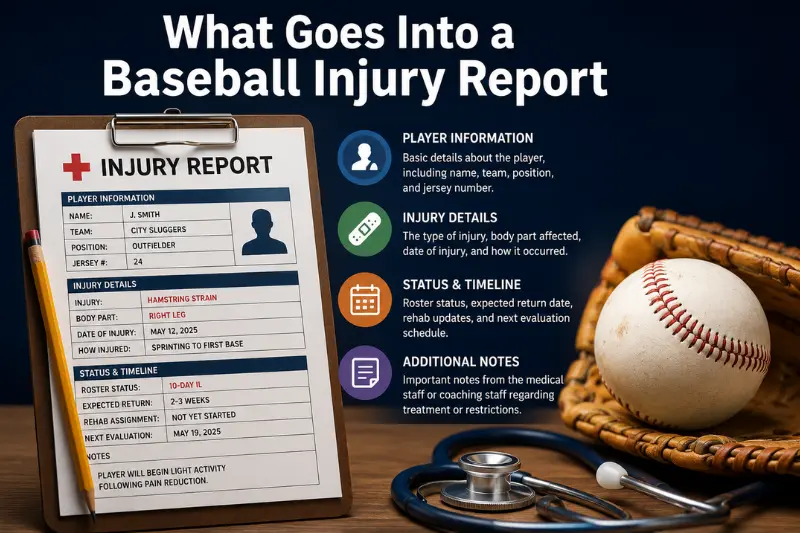
A typical report combines a few core pieces of information: the player’s name, the body part or condition affected, the roster move (if any), and a projected timeline. Some reports also include a diagnosis method, like an MRI or CT scan, and quotes from a manager or general manager.
Teams aren’t required to share every clinical detail. A club might say “lower body injury” without specifying whether it’s a hamstring, a knee, or something else entirely. This isn’t teams being cagey for fun. Vague language is sometimes intentional, since revealing precise injury details can tip off opposing pitchers or hitters about a player’s limitations.
Expert Tip: When a report uses vague language like “general soreness” for more than a week, treat it as a signal the team itself may not have a firm diagnosis yet, not as a minor issue you can dismiss.
The Injured List Explained
MLB’s injured list (IL) is the formal mechanism teams use to sideline hurt players while opening a roster spot for a replacement. There are two standard versions:
- 10-day IL: Used for shorter-term injuries. A player must sit out a minimum of 10 days before being reinstated.
- 60-day IL: Used for longer recoveries. This also removes the player from the 40-man roster, which frees up space for teams to add another player.
There’s no 15-day IL anymore for position players and pitchers under the current rules, though older articles and habits sometimes still reference it. That’s a common source of confusion for fans reading older content alongside current news.
Common Mistake: Assuming a player placed on the 10-day IL will be back in exactly 10 days. That’s the minimum, not a guarantee. Plenty of players stay on the IL for weeks beyond the minimum window while they complete rehab assignments or build back arm strength.
Rehab Assignments and What They Actually Mean
Once a player is healthy enough to face live pitching or take the mound again, teams often send them on a rehab assignment to a minor league affiliate. This isn’t just a formality. It lets the player and medical staff evaluate:
- Whether the injury holds up under game speed and contact
- Conditioning and stamina after time off
- Mechanical adjustments made during recovery
A rehab assignment going well is a good sign, but it’s not a finish line. Players sometimes get shut down again if soreness returns, which resets the clock and confuses fans who assumed a return was imminent.
Did You Know? Position players are limited to a maximum rehab assignment window under MLB rules, while pitchers generally get a longer window given the physical demands of throwing off a mound at competitive velocity.
How to Read Injury Terminology Like a Pro
Injury reports use recurring phrases that carry specific weight once you know what to listen for.
| Term | What It Usually Means |
|---|---|
| Day-to-day | Minor issue, evaluated daily, no formal IL move yet |
| Week-to-week | More serious, but not requiring surgery or long-term IL |
| Setback | A new issue arose during recovery, timeline likely extended |
| Precautionary | Team is being cautious rather than reacting to a confirmed injury |
| Season-ending | Player will not return this season, often due to surgery |
Reading these terms in context matters more than reading them in isolation. A “week-to-week” label attached to a soft tissue injury behaves very differently than the same label attached to a bone issue, even though the phrase is identical.
Pro Recommendation: Pay closer attention to whether a timeline moves forward or backward across multiple reports than to the initial estimate itself. A shrinking timeline is a good sign. A timeline that keeps sliding right, even slightly, often points to complications that haven’t been fully disclosed yet.
Why Injury Reports Aren’t Always Consistent
Not every team communicates injuries the same way, and that inconsistency trips up a lot of fans who assume reports are standardized league-wide.
Some organizations are known for being tight-lipped, offering only the minimum required disclosure. Others hold regular media availability where the manager takes detailed questions about a player’s condition. This means comparing two injury reports from different teams isn’t always an apples-to-apples exercise.
Beat reporters who cover a team daily often provide more nuance than a generic wire report, since they hear direct quotes from coaches and can ask targeted follow-up questions. If you want the most reliable read on a situation, a reporter who regularly covers that specific team is usually a better source than a general aggregator.
Practical Example: Two players might both be labeled “day-to-day” with a hamstring issue on the same day. One team’s beat writer notes the player was seen doing agility drills before the game. Another team offers no such detail. The first situation gives you far more useful information even though the official label is identical.
Injury Reports and Fantasy Baseball or Betting Decisions

If you use injury reports to make fantasy lineup calls or betting decisions, a few habits go a long way.
- Check the report’s timestamp. Injury news changes fast, and an update from three days ago may already be outdated.
- Cross-reference with beat reporters, not just the team’s official statement.
- Watch for a player’s activity level in workouts, not just the written label attached to their status.
- Understand that “cleared to play” and “in the starting lineup” are two different things. A player can be medically cleared but still held out for a game or two as a precaution.
Common Mistake: Reacting to the first headline without checking whether it’s a confirmed IL move or just speculation ahead of an official announcement. Speculation often circulates before a team confirms anything, and treating it as fact can lead to premature roster decisions.
Where to Verify Official Injury Information
For the most accurate and current information, always check primary sources rather than relying solely on secondhand summaries:
- The official MLB.com transactions page
- The specific team’s official website and press releases
- Verified beat reporters covering that team on social media
- Pre-game manager availability, when transcribed by credentialed reporters
Because player health status can change day to day, this article won’t attempt to list specific players, timelines, or current statuses. Those details age out of relevance almost immediately, and the sources above will always have more current information than any static article can offer.
Frequently Asked Questions
What’s the difference between the 10-day and 60-day injured list?
The 10-day IL is for shorter recoveries and keeps the player on the 40-man roster. The 60-day IL is for longer-term injuries and removes the player from the 40-man roster, freeing a roster spot for the team to add someone else.
Can a player be activated from the injured list early?
No. Players must serve the full minimum time on their designated IL type before being eligible for reinstatement, even if they feel ready sooner.
What does “day-to-day” mean in a baseball injury report?
It generally signals a minor issue that doesn’t require a formal roster move yet. The team is monitoring the player and deciding day by day whether they can play.
Why do some injury reports say “lower body injury” instead of naming the specific issue?
Teams sometimes keep injury details vague to avoid giving opposing teams strategic information about a player’s physical limitations.
Does a rehab assignment guarantee a player will return on schedule?
No. A rehab assignment is a testing phase. Players can be shut down again if the injury flares up, which extends the recovery timeline.
Are injury reports the same across every MLB team?
Not exactly. Teams vary in how much detail they disclose publicly, so it helps to follow beat reporters for the specific team you’re tracking.
What’s a “setback” in an injury report?
A setback means a new complication or a return of symptoms occurred during recovery, which typically pushes the return timeline further out.
How often should I check an injury report for a player I’m tracking?
Since status can change quickly, checking daily during an active recovery period is reasonable, especially close to a projected return date.
Conclusion
Understanding a baseball injury report is about more than knowing whether a player is available for the next game. It helps you interpret roster decisions, follow recovery progress, and make more informed choices whether you’re tracking your favorite team, managing a fantasy baseball roster, or evaluating betting opportunities.
Instead of reacting to every headline, focus on official injury updates, roster transactions, rehab assignments, and trusted team coverage to understand the full picture. Injury timelines can change quickly, so context is often just as important as the initial report.
As you become familiar with common injury terminology and the way MLB teams communicate player availability, you’ll be able to separate meaningful updates from speculation and make smarter decisions throughout the season. Checking reliable sources and understanding how injury reports work will always be more valuable than relying on rumors or outdated information.