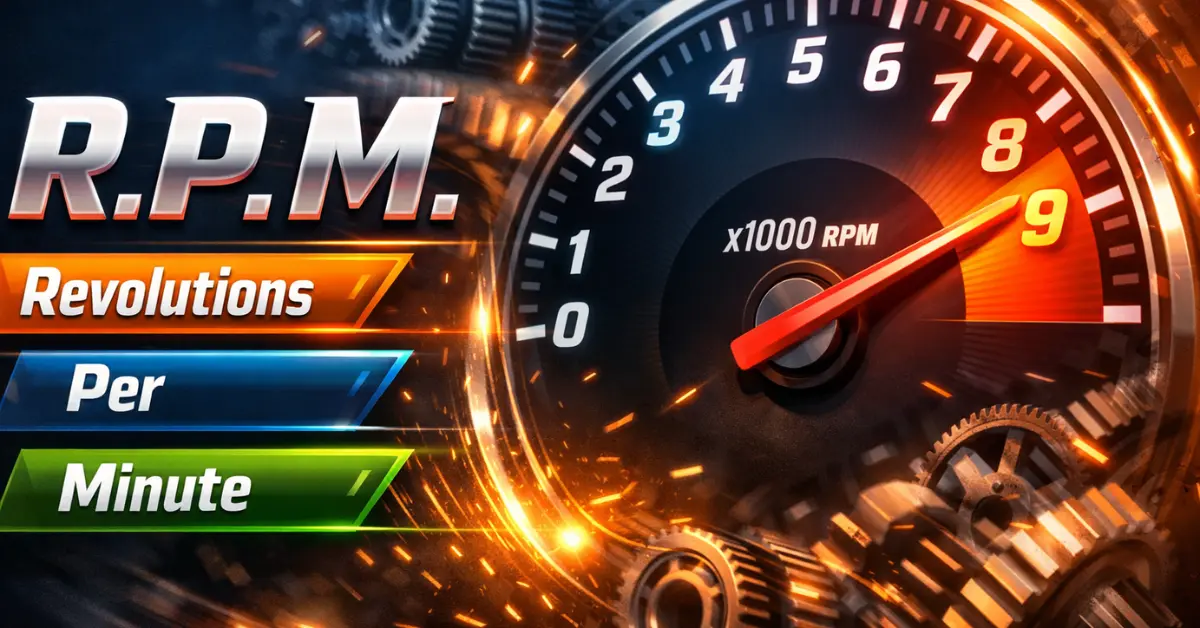

RPM Full Form Revolutions Per Minute, a vital measurement used to gauge the speed of rotating objects. It tells us how many complete rotations an object makes in just one minute. From the engines in cars to the fans in your home, RPM is used across various industries to monitor performance and efficiency. Whether in mechanical systems or everyday gadgets, knowing RPM helps ensure everything operates smoothly and effectively.
What is RPM? Full Form Explained
RPM Full Form Revolutions Per Minute.
It measures the number of complete rotations or cycles an object makes around its axis in one minute. RPM is widely used in various fields, including engineering, physics, and everyday devices. It’s a key metric in determining how fast something is spinning, from car engines to household fans.
How RPM is Used in Different Industries
RPM is a versatile measurement used in multiple sectors. Here’s a breakdown of how RPM is applied:
In Automotive Engines:
RPM measures the speed at which the engine’s crankshaft rotates. Understanding RPM helps drivers monitor their engine’s performance and maintain optimal fuel efficiency.
- Low RPM (e.g., 600-1,000 RPM): Idle or cruising at low speeds, generally more fuel-efficient.
- High RPM (e.g., 3,000+ RPM): Higher speeds during acceleration or overtaking, requiring more power but consuming more fuel.
In Household Appliances:
RPM is used to measure the speed of rotating parts in household items like washing machines, fans, and blenders.
- Washing Machines: Spin cycles range from 500 to 2,000 RPM, affecting water extraction efficiency.
- Fans: Ceiling fans usually operate between 300–400 RPM, affecting airflow and cooling power.
In Medical Equipment:
RPM is used in centrifuges, which separate substances by their density, and in dialysis machines, which regulate blood flow and filtration.
In Computers:
In hard drives, RPM measures how fast the disk spins to read/write data. A typical hard drive runs at 5,400 to 7,200 RPM, influencing data transfer speed.
What Does RPM Mean in Car Engines?
RPM is crucial for understanding how an engine operates. It directly affects your car’s performance and fuel efficiency.
- Optimal RPM: Most cars operate best between 1,500-2,500 RPM while cruising, balancing power and fuel efficiency.
- Redlining: Exceeding the recommended RPM (usually around 5,000-7,000 RPM) can cause engine strain, reducing its lifespan.
How to Monitor RPM in Cars:
- Tachometer: Cars have a tachometer (usually near the speedometer) that shows RPM. Keeping RPM in the optimal range ensures smooth operation.
- Avoid Over-revving: Driving in the red zone (high RPM) can damage the engine. Pay attention to the redline marking on the tachometer.
How RPM Affects Performance in Different Devices
In Motors and Engines:
RPM is critical for performance in engines and motors. Higher RPM means more power, which is useful in situations like accelerating or climbing hills. However, it can increase wear on the engine over time.
In Fans:
For fans, RPM indicates how fast the blades rotate. Higher RPM means better airflow and more effective cooling.
How to Calculate RPM
RPM can be easily calculated using the formula:
RPM = Number of Rotations / Time in Minutes
For example, if a fan completes 180 rotations in 3 minutes, the RPM is:
RPM = 180 / 3 = 60 RPM
How to Calculate RPM
RPM can be easily calculated using the formula:
Managing RPM is important for both machinery and everyday devices to ensure they last longer and perform at their best.
- For Cars: Maintain RPM within the recommended range to avoid engine wear.
- For Washing Machines: Use the correct RPM setting for the load size. Higher RPM for large loads helps remove more water.
- For Fans: Choose a fan with the right RPM based on the room size and cooling needs.
RPM vs Angular Velocity
While RPM measures rotational speed in one minute, angular velocity refers to the angle turned per unit time. RPM is a specific case of angular velocity, often used for practical measurements.
Common RPM-Related FAQs
What is RPM in Cars?
RPM in cars refers to the number of revolutions the engine crankshaft completes in one minute. It’s shown on the tachometer and is crucial for understanding engine performance.
What Does 1 RPM Mean?
1 RPM means one full rotation of an object per minute, which is the lowest unit of rotational speed.
How Can I Measure RPM in My Car?
You can measure RPM in your car using the tachometer, which displays engine speed. Keep it within the optimal range for fuel efficiency and engine health.
Conclusion: Why RPM Matters
RPM is more than just a technical term—it’s a vital metric that affects the performance, efficiency, and longevity of various devices, from car engines to household fans. By understanding RPM and monitoring it effectively, you can optimize performance, save fuel, and ensure the smooth operation of everyday machinery.