

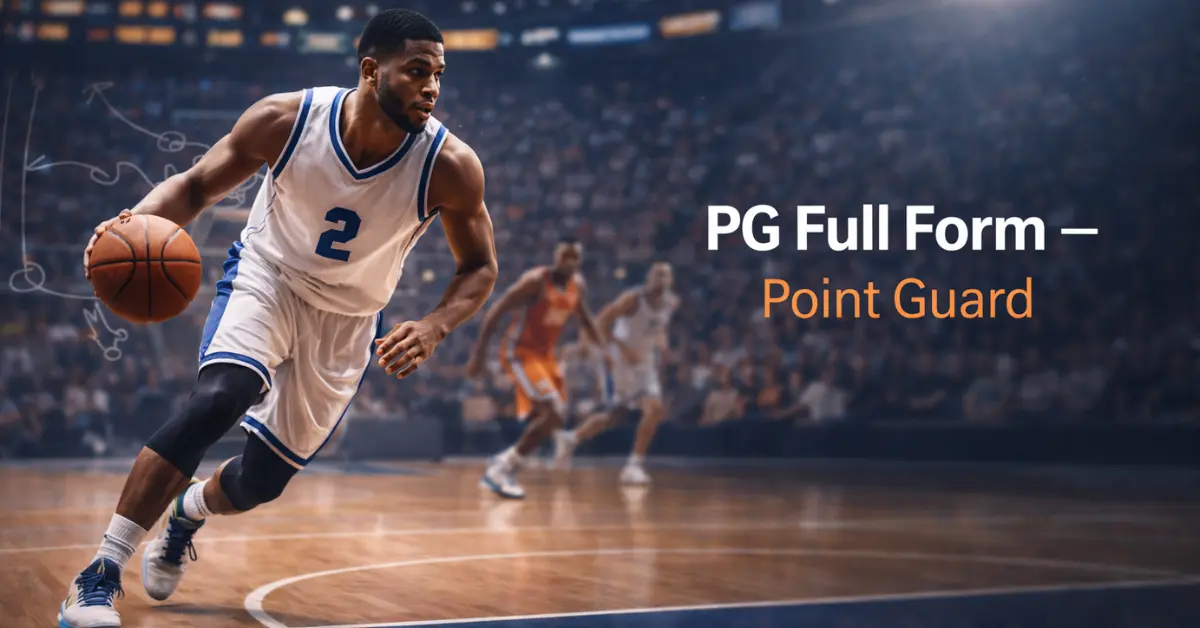
If you’ve ever watched a basketball game or followed NBA highlights, you’ve probably seen someone called a PG. Maybe you wondered, What is the PG Full Form? Don’t worry, you’re not alone. Today, we’re breaking it down in the simplest, most relatable way.
What Is the PG Full Form?
The PG full form is Point Guard.
Simple, right? But the role goes way beyond just a name. Think of the point guard as the team’s floor general—the person who runs the offense, sets up plays, and makes sure everyone knows where they should be on the court. In many ways, a point guard is like an extension of the coach during the game.
Why Point Guards Are So Important
A point guard isn’t just dribbling the ball and shooting—it’s about control, timing, and basketball IQ. Here’s why PGs are so crucial:
Control the Pace
Great PGs know when to speed up the game and when to slow it down. In fast breaks, they push the ball aggressively. In half-court sets, they carefully read the defense before making a move. This balance is what separates good teams from great ones.
Create Opportunities
A point guard sees the whole floor. They know which teammate is open, which defender is out of position, and how to make a pass that leads to an easy basket. Sometimes it’s not just about getting an assist—it’s about setting up a teammate to score in the next play, like a “hockey assist” in 2K or real life.
Score and Attack with Control
Modern PGs don’t just pass—they score too. The best ones can attack the paint at high speed but still stay in control to make precise shots or passes. It’s a mix of skill, patience, and knowing when to go all out.
Defend Smartly
Point guards aren’t just offensive masterminds—they also defend. Closing out on shooters, navigating screens, and recovering quickly are all part of the job. The best PGs make life tough for the opponent without fouling or losing their composure.
Lead the Team
Leadership is subtle but powerful. PGs communicate constantly, call out plays, and keep teammates focused—even when the game is tight. Some of the greatest point guards in NBA history, like Magic Johnson or Chris Paul, were as much leaders as they were playmakers.
Skills That Make a Great Point Guard
To really shine as a PG, a player needs a mix of physical skill and mental sharpness:
- Ball Handling: Tight control of the ball to navigate defenders.
- Passing: Accurate, creative passes to open teammates.
- Court Vision: Anticipate plays before they happen.
- Shooting: Stretch the defense with consistent long-range shots.
- Composure: Stay calm under pressure and make smart decisions.
Traditional vs Modern PGs
- Traditional Point Guards: Focused on passing and running the offense (think John Stockton).
- Modern Point Guards: Can score, shoot, and still pass (think Stephen Curry or Damian Lillard).
- Combo Guards: Blend PG and SG roles, often scoring first (think Russell Westbrook).
The game has evolved, and so has the PG role. Today’s point guard is a versatile playmaker, scorer, and leader all in one.
Famous PGs Who Changed the Game
Some PGs leave a mark that goes beyond stats:
- Stephen Curry: Revolutionized basketball with deep-range shooting.
- Chris Paul: Precision passing and defensive brilliance.
- Magic Johnson: Legendary leadership and versatility.
- Russell Westbrook: Athleticism and relentless energy, averaging triple-doubles.
These players didn’t just play the game—they defined what a point guard can be.
How to Become a Better Point Guard
Want to improve your PG skills? Focus on:
- Dribbling Drills: Cone drills, resistance training, two-ball handling.
- Passing Accuracy: Practice all types of passes under pressure.
- Decision-Making: Watch film to learn defensive patterns.
- Conditioning: Build stamina for full-court pressure.
- Leadership: Communicate, encourage teammates, and take responsibility.
Remember, being a PG isn’t just about stats—it’s about making your team better.
Summary
So, next time someone asks, “What’s PG full form?” you can confidently say: Point Guard—the floor general, playmaker, leader, and sometimes top scorer of a basketball team. Whether you’re playing pickup games or watching the pros, understanding the point guard role changes how you see basketball entirely.
