
A basketball court is more than just a playing surface. It is a space for training, competition, fitness, entertainment, and family connection. Whether you want a professional indoor basketball court, a backyard half court, or a custom residential basketball court, understanding the right dimensions, materials, costs, and design options is essential.
This complete guide explains everything you need to know about basketball courts in a simple and easy-to-understand way. You will learn about official court sizes, flooring options, installation methods, maintenance, safety features, and much more.
Unlike many competitor articles, this guide covers both professional and residential basketball courts while also answering the questions people actually search for online.
What Is a Basketball Court?
A basketball court is a rectangular playing surface designed for basketball games and practice. Courts can be built indoors or outdoors and may vary in size depending on the level of play.
Basketball courts are commonly found in:
- Schools
- Colleges
- Sports complexes
- Parks
- Recreation centers
- Residential homes
- Training facilities
Modern basketball courts can also support multiple sports such as pickleball, volleyball, and tennis.
Standard Basketball Court Dimensions
Basketball court dimensions depend on the level of competition.
NBA Basketball Court Dimensions
Professional NBA courts are the largest standard courts.
| Feature | Measurement |
|---|---|
| Court Length | 94 feet |
| Court Width | 50 feet |
| Hoop Height | 10 feet |
| Free Throw Distance | 15 feet |
| Three-Point Line | 23 feet 9 inches |
NBA courts are designed for elite-level performance and professional gameplay.
NCAA Basketball Court Dimensions
College basketball courts use nearly the same dimensions as NBA courts.
| Feature | Measurement |
|---|---|
| Court Length | 94 feet |
| Court Width | 50 feet |
| Three-Point Line | 22 feet 1.75 inches |
High School Basketball Court Dimensions
High school basketball courts are slightly shorter than professional courts.
| Feature | Measurement |
|---|---|
| Court Length | 84 feet |
| Court Width | 50 feet |
| Free Throw Distance | 15 feet |
| Three-Point Line | 19 feet 9 inches |
The smaller size helps schools fit courts inside standard gymnasiums while maintaining competitive gameplay.
Backyard Basketball Court Dimensions
Home basketball courts are usually customized according to available space and budget.
Common Backyard Court Sizes
| Court Type | Recommended Size |
|---|---|
| Full Court | 94 × 50 feet |
| High School Court | 84 × 50 feet |
| Half Court | 47 × 50 feet |
| Small Practice Court | 30 × 30 feet |
| Youth Court | 37 × 42 feet |
A half court is one of the most popular options for homeowners because it provides enough space for shooting drills and casual games without requiring a massive backyard.
Indoor vs Outdoor Basketball Courts
Choosing between an indoor and outdoor basketball court depends on your budget, available space, climate, and intended use.
Indoor Basketball Courts
Indoor courts provide professional-level playing conditions.
Benefits of Indoor Courts
- Better ball bounce
- Weather protection
- Longer playing sessions
- Professional appearance
- Improved player comfort
Common Indoor Flooring Materials
- Hardwood maple
- Synthetic sports flooring
- Rubber sports flooring
- Modular athletic tiles
Best For
- Schools
- Gyms
- Training facilities
- Luxury homes
- Professional practice
Outdoor Basketball Courts
Outdoor basketball courts are built to handle changing weather conditions.
Benefits of Outdoor Courts
- Lower construction costs
- Easier installation
- Great for family recreation
- Perfect for backyard entertainment
Common Outdoor Surfaces
- Concrete
- Asphalt
- Acrylic sports coating
- Modular polypropylene tiles
Best For
- Residential homes
- Public parks
- Recreational facilities
- Community courts
Best Basketball Court Flooring Options
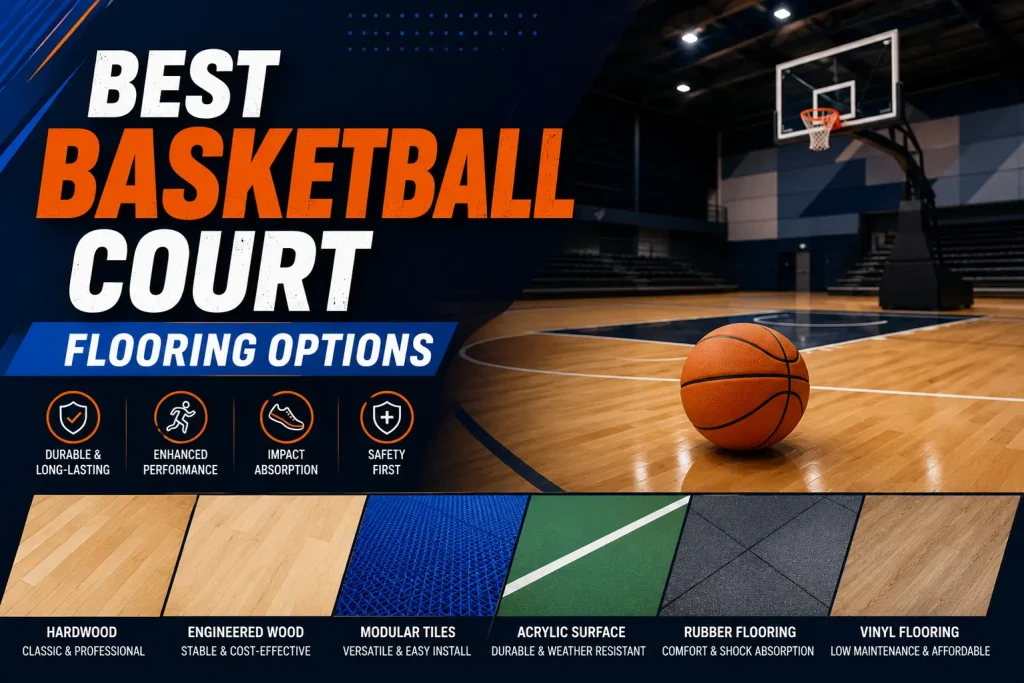
The flooring material directly affects performance, safety, durability, and maintenance.
Hardwood Basketball Flooring
Hardwood is the professional standard for indoor basketball courts.
Advantages
- Excellent ball response
- Premium appearance
- Smooth playing surface
- Professional-level performance
Disadvantages
- Expensive
- Requires climate control
- Sensitive to moisture
Best For
- Indoor gyms
- Schools
- Professional courts
Acrylic Basketball Court Surface
Acrylic surfaces are popular for outdoor basketball courts.
Advantages
- Durable
- UV resistant
- Slip resistant
- Affordable
Disadvantages
- Harder on joints
- Requires resurfacing over time
Best For
- Outdoor courts
- Parks
- Schools
Modular Tile Basketball Flooring
Modular tile systems are becoming increasingly popular for residential basketball courts.
Advantages
- Shock absorption
- Easy installation
- Low maintenance
- Custom color options
- Better drainage
Disadvantages
- Higher upfront material cost
Best For
- Backyard courts
- Multi-sport courts
- Residential installations
Basketball Court Construction Process
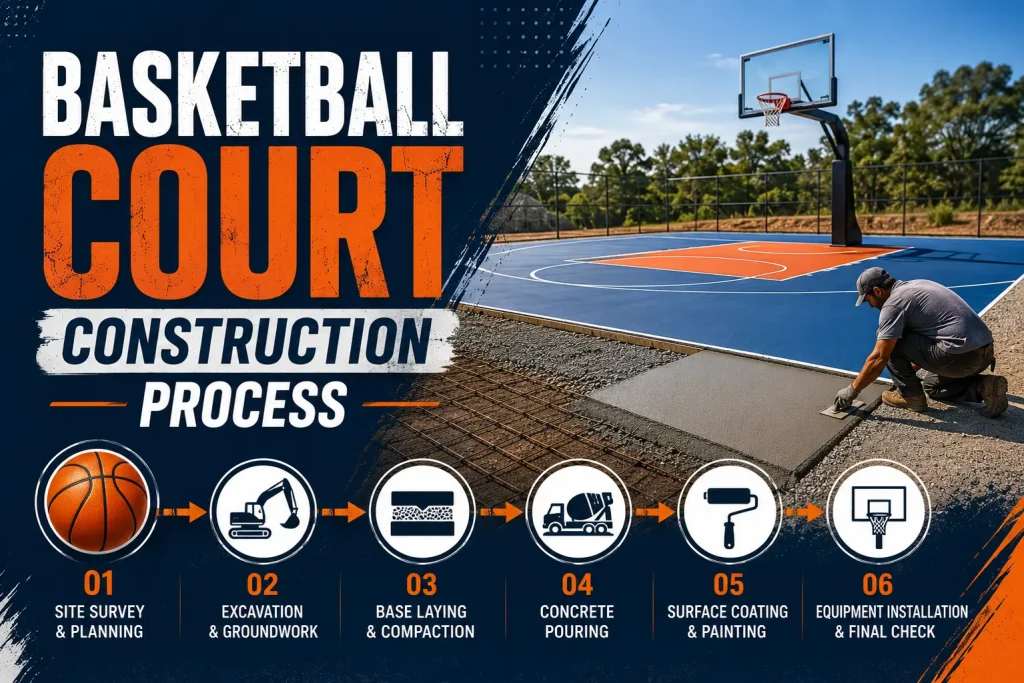
Building a basketball court requires proper planning and preparation.
Step 1: Site Evaluation
Before construction begins, professionals evaluate:
- Ground stability
- Drainage
- Available space
- Slope conditions
Proper site preparation prevents long-term cracking and drainage problems.
Step 2: Excavation and Base Preparation
The installation area is excavated and leveled. A strong foundation is critical for:
- Surface durability
- Player safety
- Proper ball bounce
Concrete is usually preferred over asphalt because it lasts longer and provides better stability.
Step 3: Surface Installation
The selected flooring system is installed:
- Acrylic coating
- Hardwood flooring
- Modular sports tiles
Step 4: Court Markings
Professional court lines are added, including:
- Free throw line
- Three-point line
- Key area
- Center circle
- Baselines
- Sidelines
Step 5: Basketball Hoop Installation
Regulation basketball hoop height is:
- 10 feet for adults
- Adjustable heights for youth players
Common hoop systems include:
- In-ground hoops
- Portable hoops
- Wall-mounted hoops
Basketball Court Costs
Basketball court costs vary based on size, materials, and customization.
Average Basketball Court Price
| Court Type | Estimated Cost |
|---|---|
| Small Backyard Court | $8,000 – $20,000 |
| Half Court | $15,000 – $45,000 |
| Full Outdoor Court | $35,000 – $80,000 |
| Indoor Hardwood Court | $50,000 – $250,000+ |
Factors That Affect Basketball Court Cost
Several factors influence the final cost.
Court Size
Larger courts require more materials and labor.
Surface Material
Hardwood flooring costs significantly more than acrylic or asphalt surfaces.
Drainage System
Outdoor courts require proper drainage to prevent water damage.
Lighting
Sports lighting increases usability during evenings.
Custom Features
Additional upgrades may include:
- Logos
- Fencing
- Seating
- Scoreboards
- Multi-sport striping
Basketball Court Lighting
Proper lighting improves visibility and player safety.
Best Lighting Options
- LED sports lights
- Pole-mounted lighting
- Smart lighting systems
LED lighting is energy efficient, long-lasting, and ideal for outdoor basketball courts.
Basketball Court Safety Features
Safety is one of the most important parts of court design.
Important Safety Features
- Shock-absorbing flooring
- Non-slip surfaces
- Proper drainage
- Fence protection
- Wall padding
- Safe perimeter spacing
These features help reduce injuries and improve long-term court performance.
Basketball Court Maintenance
Proper maintenance extends the lifespan of your basketball court.
Indoor Court Maintenance
- Daily cleaning
- Dust removal
- Humidity control
- Periodic refinishing
Outdoor Court Maintenance
- Pressure washing
- Crack repair
- Surface resealing
- Drainage inspection
Outdoor courts typically require resurfacing every 4–8 years depending on usage and climate.
Multi-Sport Basketball Courts
Many homeowners now build multi-use courts instead of basketball-only courts.
Popular Multi-Sport Options
- Basketball and pickleball
- Basketball and volleyball
- Basketball and tennis
Multi-sport courts maximize space and provide more recreational value for families.
Common Mistakes to Avoid When Building a Basketball Court
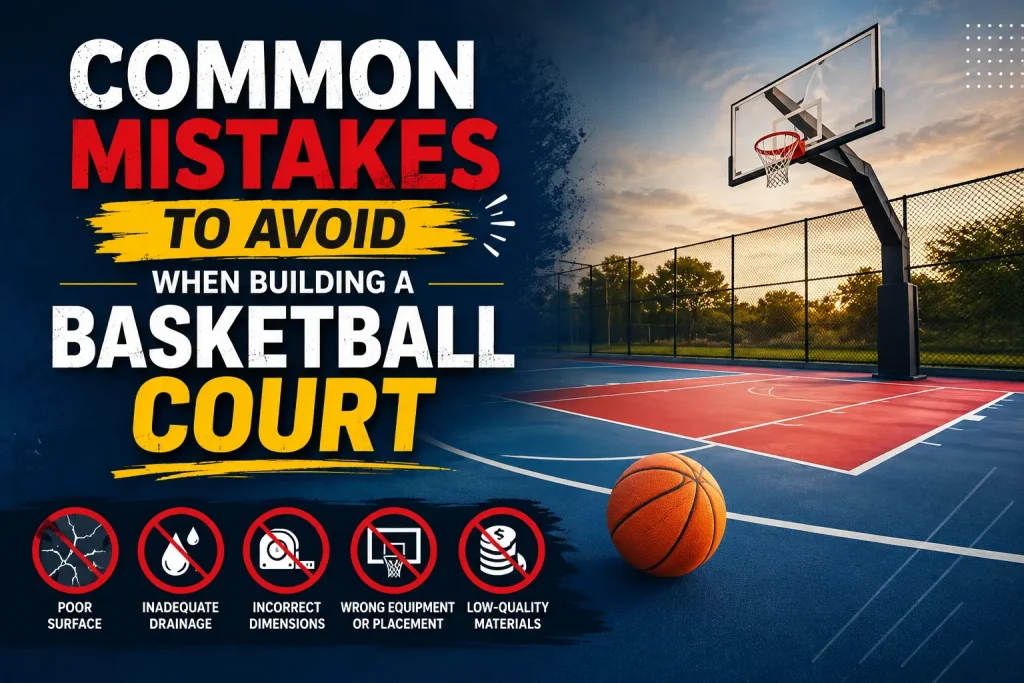
Many basketball court problems happen because of poor planning.
Ignoring Drainage
Poor drainage can cause:
- Surface cracks
- Water pooling
- Structural damage
Choosing the Wrong Surface
Different surfaces perform differently depending on climate and usage.
Poor Lighting Placement
Incorrect lighting creates shadows and visibility issues.
Not Leaving Enough Safety Space
Players need safe runoff space around the court perimeter.
Using Cheap Basketball Hoops
Low-quality hoops often fail quickly and reduce gameplay quality.
How to Choose the Right Basketball Court
Choosing the best basketball court depends on your goals.
Choose Based On:
Available Space
Measure your property carefully before selecting a court size.
Budget
Consider:
- Construction
- Maintenance
- Lighting
- Accessories
- Long-term repairs
Usage Type
Ask yourself:
- Is the court for recreation or competitive play?
- Will children use the court?
- Is it indoor or outdoor?
Climate Conditions
Outdoor courts must withstand local weather conditions.
Frequently Asked Questions
What is the standard size of a basketball court?
An NBA and NCAA basketball court measures 94 feet long and 50 feet wide.
How much doIs concrete or asphalt better for basketball courts?es it cost to build a basketball court?
A basketball court can cost anywhere from $8,000 to over $250,000 depending on size, materials, and customization.
What is the best surface for an outdoor basketball court?
Acrylic-coated concrete and modular sports tiles are among the best options for outdoor basketball courts.
Is concrete or asphalt better for basketball courts?
Concrete is generally better because it lasts longer, cracks less, and provides a smoother playing surface.
What is the best flooring for indoor basketball courts?
Hardwood maple flooring is considered the professional standard for indoor basketball courts.
How much space do I need for a backyard basketball court?
A half court typically requires at least 50 × 60 feet of total space including safe runoff areas.
How long does a basketball court last?
A properly maintained basketball court can last 15–30 years depending on materials and maintenance.
Final Thoughts
A well-designed basketball court provides years of entertainment, exercise, competition, and family fun. Whether you are building a professional indoor gym or a simple backyard basketball court, choosing the right dimensions, flooring, and installation method is essential.
Unlike many competitor articles that only discuss dimensions or promotional information, this guide covers every important aspect of basketball court planning, construction, maintenance, safety, and cost.
By understanding court sizes, flooring options, drainage requirements, lighting systems, and long-term maintenance needs, you can make smarter decisions and create a basketball court that delivers excellent performance for years to come.